Home › Commercial Sidewalks and Curb
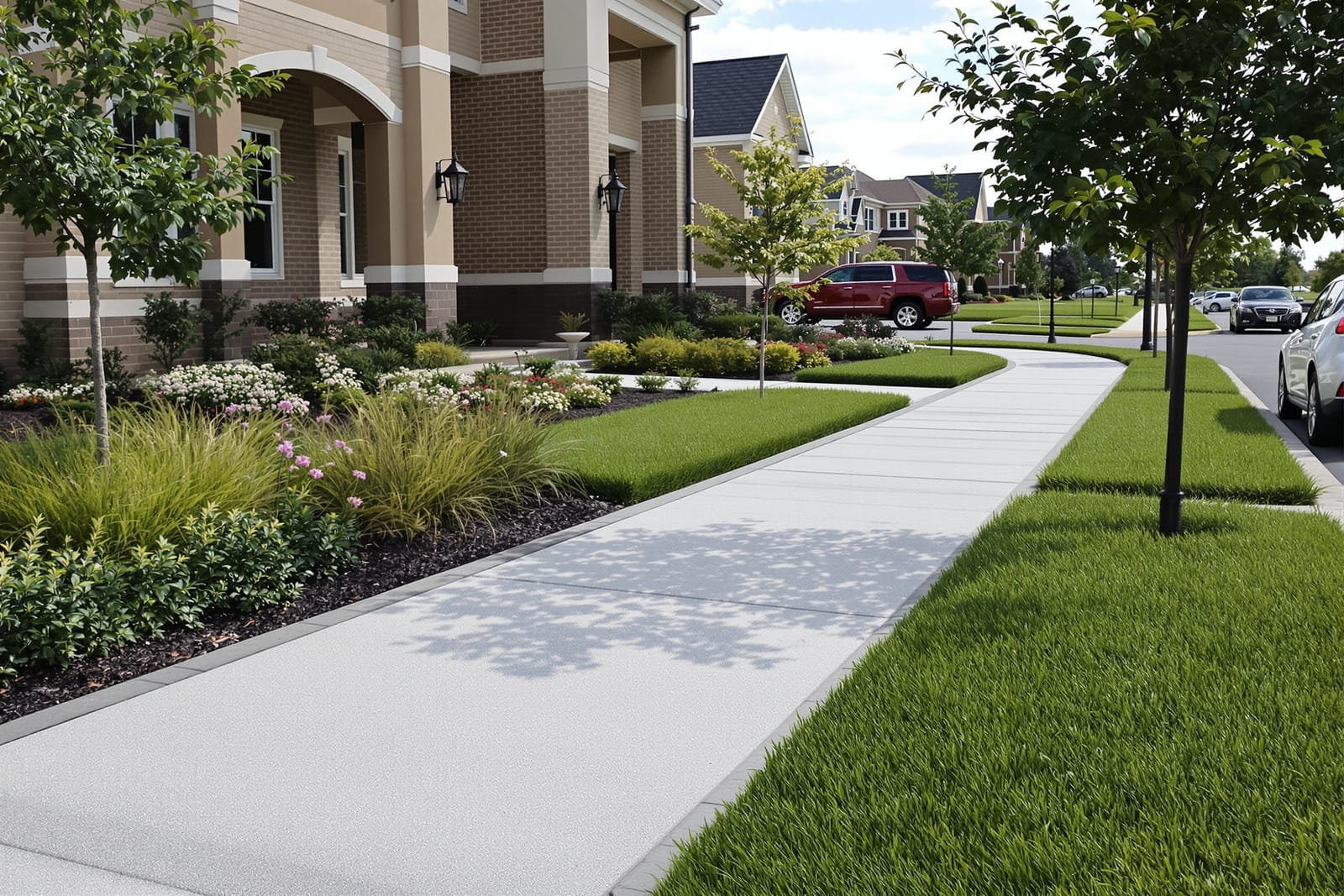
Give customers and tenants safe access with commercial concrete sidewalks and curbs in Detroit, MI. We install city sidewalks, curb and gutter, and ADA compliant ramps around buildings and parking lots. Proper slopes and finishes keep pedestrians safer in all weather.
Superior Concrete Detroit provides professional commercial concrete sidewalk throughout Detroit, MI, Michigan and the surrounding area. Our licensed, insured crew delivers safe, clean, on-time work with a free estimate before anything begins. Call (313) 986-4241 or request your free quote.
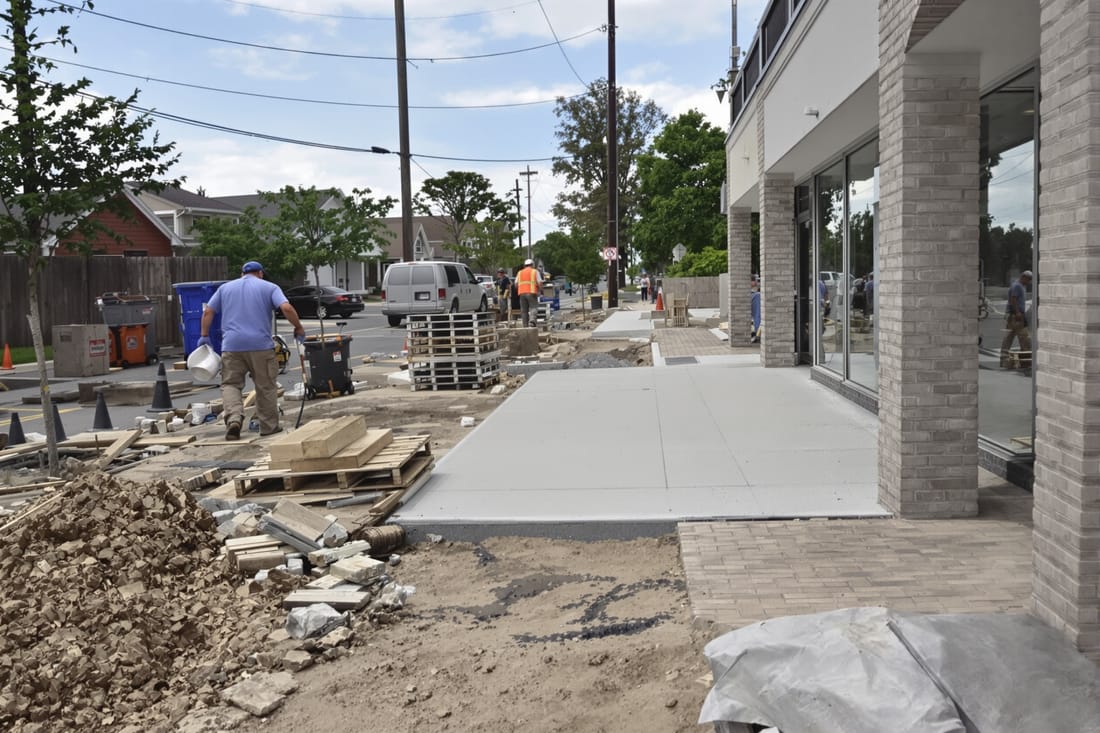
Durable commercial sidewalks and curb work for Detroit properties
Commercial concrete sidewalk and curb work in Detroit has to handle heavy foot traffic, freeze-thaw cycles, and snow equipment. Superior Concrete Detroit focuses on building walks and curbs that survive Michigan winters without constant patching.
For retail centers, office parks, schools, medical facilities, and industrial sites, we look at how people actually move on your property. That means planning sidewalk widths for groups, ADA-compliant slopes at entrances, and curb configurations that match your parking layout and delivery zones. The goal is not just to pour concrete, but to solve access and drainage problems so you are not dealing with ice sheets, puddles, or trip hazards every winter.
Our crews are used to working around active businesses in Detroit. We can phase sidewalk and curb replacements in sections so customers and staff still have a safe way in and out. That might mean night or weekend work, temporary ramps, and clear barricades so no one is stepping into fresh concrete. The end result is a commercial concrete sidewalk and curb system that looks clean, drains correctly, and handles traffic without spalling or shifting every season.
How we plan and prepare your commercial concrete sidewalk project
A solid commercial concrete sidewalk and curb job starts with planning, not concrete. We begin with a site walk, measuring existing grades, checking where water is currently going, and locating utilities, cleanouts, and access points. Many Detroit sites have older patchwork sidewalks and mismatched curb profiles, so we often recommend a layout that simplifies snow plowing and improves ADA access.
Once we understand the site, Superior Concrete Detroit prepares a layout plan. That includes sidewalk width, sawcut joint spacing, curb type (standard curb and gutter, straight curb, or roll curb), and approach locations near driveways and loading docks. We confirm compliance with local Detroit and Michigan codes, including cross slope limits, ramp slopes, and detectable warning areas at crossings.
On prep day, our crew sawcuts and removes existing concrete or asphalt, then excavates to the required depth. In commercial settings we typically install 4 to 6 inches of compacted crushed concrete or aggregate base under sidewalks, and more under curbs and access drives. Proper compaction is critical in Detroit’s freeze-thaw climate, so we use plate compactors or rollers and check that the base is stable and drains away from buildings and entrances.
Before we set forms, we address drainage. That can mean adjusting elevations to remove low spots, pitching sidewalks away from buildings, and aligning curb and gutter so surface water moves toward catch basins instead of pooling at entrances. Only after the base and drainage are correct do we form the sidewalk and curb lines.
Concrete mix, reinforcement, and finish options that matter in Detroit
For commercial concrete sidewalk and curb work, mix design is just as important as thickness. In most Detroit commercial applications, Superior Concrete Detroit uses a 4000 psi air-entrained concrete mix, which helps resist freeze-thaw damage and deicing salts. On drive approaches, loading zones, and dumpster pads, we typically increase to 4500 psi or more since heavy trucks will be turning on the slab.
Reinforcement is selected based on use. Standard pedestrian sidewalks may only need proper jointing, while sidewalks that will see carts, pallet jacks, or occasional vehicle loading often get welded wire mesh or rebar placed on chairs to keep steel in the middle of the slab. Curbs and curb and gutter sections usually receive rebar dowels at joints and at tie-ins to existing pavement to limit separation and settlement.
Finish options are not just cosmetic. We usually recommend a broom finish for commercial concrete sidewalks in Detroit because it provides traction when surfaces are wet or icy. For high-visibility areas like building entrances or outdoor seating, we can add decorative touches such as borders, scoring patterns, or integrally colored concrete. At curbs, we make sure edges are defined enough for drivers to see and feel but not so sharp that they chip easily with plow contact.
Control joints are sawcut or tooled at calculated intervals so the slab cracks where it is supposed to. On typical commercial walkways, joints are spaced about two times the slab thickness in feet (for example, every 8 feet on a 4 inch sidewalk), though we adjust that based on slab geometry and expected loads.
Pouring, curing, and protecting your new commercial concrete sidewalk
Timing and protection are what keep a new commercial concrete sidewalk in good shape. In Detroit, we prefer to schedule exterior pours in spring through fall when nighttime temperatures are more stable. If you need winter work, Superior Concrete Detroit can still do it, but we use cold weather techniques such as heated water in the mix, blankets, and sometimes accelerators, and we avoid placing on frozen subgrade.
On pour day, concrete is placed and consolidated to remove voids, then struck off to elevation. We float the surface, set edges, and install joints, then apply a broom finish for traction. Curbs and curb and gutter are formed and poured to match the planned profile so water flows properly toward inlets and does not pond at crosswalks or driveway transitions.
Curing starts immediately after finishing. We typically apply a curing compound to slow water loss from the surface, which helps prevent early shrinkage cracks and increases long-term strength. In hotter or windy weather, we may also use evaporation reducers or adjust pour times to morning hours. During the first 24 to 72 hours, we protect the area with barricades, caution tape, and signage so no one walks or drives on the fresh concrete.
For light foot traffic, most commercial sidewalks can be opened within 24 to 48 hours, depending on conditions. Vehicular traffic at drive approaches and curb and gutter areas usually waits 5 to 7 days. We coordinate with property managers so openings align with your business hours and deliveries and so there are no surprises for tenants or customers.
What drives cost and how to keep your project within budget
Cost on a commercial concrete sidewalk and curb project in Detroit depends on more than square footage. Access, demolition, existing subgrade conditions, and required thickness all have major impacts. Removing thick, reinforced concrete or asphalt, working in tight courtyards, or hauling debris through underground garages adds labor and disposal costs.
Soil conditions matter. If we find soft or organic material below your current walk, we may need to dig deeper and add extra base aggregate to prevent future settling. This adds cost up front but saves money compared to tearing out settled panels in a few years. Drainage corrections, such as re-sloping sidewalks or adjusting curb and gutter elevations, can also affect cost but are important to reduce ice, puddling, and slip incidents.
Design choices also influence pricing. Thicker slabs, higher strength concrete, decorative scoring, color, or integral borders all add to the total. However, some upgrades are cost-effective in the long run. For instance, increasing thickness and using a stronger mix at loading zones or dumpster access points normally reduces cracking and replacement frequency.
Superior Concrete Detroit provides itemized proposals that separate demolition, base prep, forming, concrete placement, and finishing. This transparency helps property owners and managers understand where their money is going and where adjustments can be made without hurting durability. We can also phase larger projects across seasons so you can spread cost over different budget cycles while still making progress on safety and appearance.
Common Detroit sidewalk and curb issues and how we prevent them
Detroit’s climate and existing infrastructure create repeating problems in commercial concrete sidewalk and curb systems. Heaving from freeze-thaw cycles, salt damage near parking lots and roads, tree root uplift, and ponding at entrances or accessible routes are all common. Superior Concrete Detroit addresses these issues in design and installation so you are not paying to fix the same spots every few years.
To reduce heaving and settlement, we start with proper excavation and compacted base. Where drainage is poor, we may recommend underdrains or adjusting grades so water does not sit under the slab. Near entrances, we avoid creating flat spots right at the door that can turn into ice sheets in winter. Instead, we pitch the commercial concrete sidewalk just enough to move water away while staying within ADA slope limits.
Tree roots can destroy even a thick sidewalk if not planned around. On tree-lined Detroit streets or landscaped campuses, we evaluate root zones, consider root barriers, and sometimes adjust the sidewalk alignment or joint placement to accommodate growth. For curbs and curb and gutter, we tie new work correctly into existing pavement and inlets so joints do not open up and leak water into the base.
Before you hire any contractor, ask how they handle freeze-thaw, deicing salts, and ADA compliance on commercial concrete sidewalks in Michigan. Ask for details on base thickness, concrete mix, joint spacing, and curing methods. Superior Concrete Detroit welcomes those questions and provides clear answers, because the details are what keep your sidewalks and curbs safe, compliant, and looking professional for years.